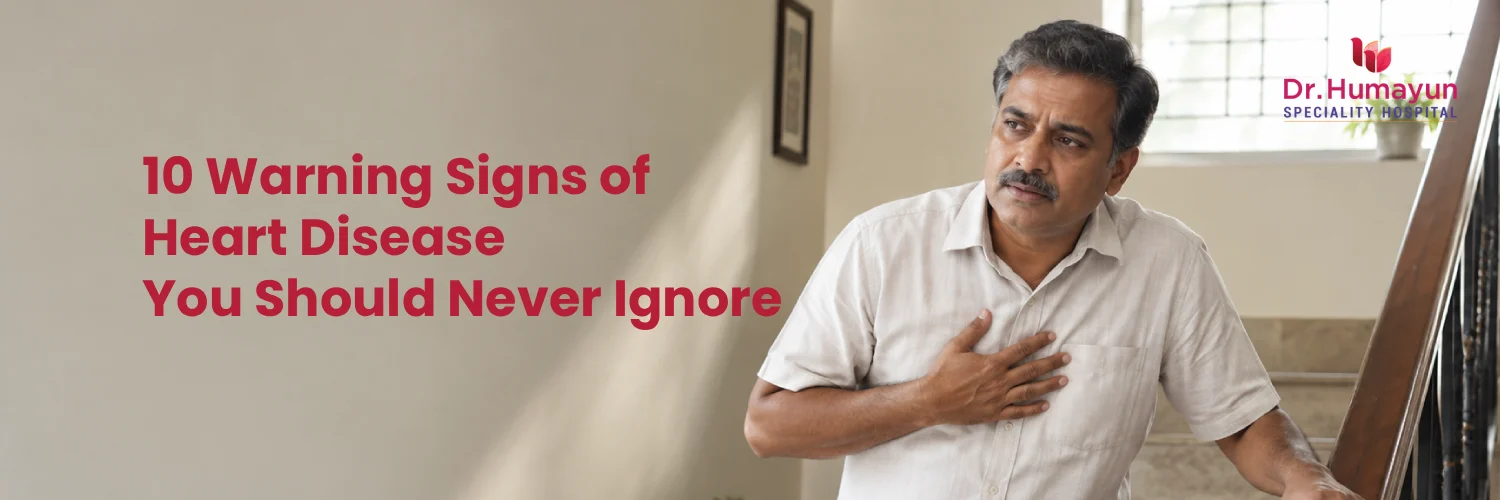
Chest pain sends more people to our emergency department than almost any other symptom, and most of them are not having a heart attack. Acid reflux, a pulled muscle, anxiety and lung infections all produce chest discomfort. The problem is that a genuine cardiac event does not always announce itself loudly. Some of the most serious ones feel like indigestion.
This guide explains what cardiologists actually look for, so you can judge when to wait and when to move.
What Cardiac Chest Pain Usually Feels Like
Pain from a blocked coronary artery is more often described as pressure than as pain. Patients say it feels like a weight, a band tightening, or a fist in the middle of the chest. It sits behind the breastbone rather than at a single point you can touch with one finger.
- Heaviness, squeezing or burning behind the breastbone
- Spreading to the left arm, both arms, jaw, neck, upper back or stomach
- Coming on with exertion, a heavy meal, cold weather or emotional stress
- Lasting more than a few minutes, or coming in waves
- Accompanied by sweating, breathlessness, nausea or a sense of dread
That combination of sweating and breathlessness with chest discomfort is the pattern that matters most. It is rarely produced by reflux or muscle strain.
Causes That Are Not Your Heart
Several conditions mimic cardiac pain closely enough to fool experienced clinicians without a test.
- Acid reflux: burning that rises up the chest, worse lying flat or after spicy food, often with a sour taste
- Muscle or rib strain: sharp, reproducible when you press the spot or twist your torso
- Anxiety and panic: tightness with rapid breathing, tingling in the fingers and lips, often peaking within ten minutes
- Lung infection or pleurisy: pain that stabs when you breathe in deeply or cough
- Gallstones: pain under the right ribs after fatty meals, which can radiate up
Reflux and gallbladder pain are common enough that our gastroenterology team sees many patients who arrived first with a suspected cardiac problem.
The Symptoms That Look Different in Women and in People With Diabetes
Textbook crushing chest pain is the male, non diabetic presentation. Women more often report unusual fatigue for days beforehand, breathlessness, nausea, or pain in the jaw and upper back with only mild chest discomfort.
People living with diabetes may have blunted nerve signalling, so a heart attack can present as sudden breathlessness, confusion or profound weakness with no chest pain at all. If you have had diabetes for years, treat any unexplained collapse in exercise capacity as cardiac until proven otherwise, and keep up with structured diabetes care.
What Doctors Do in the First Ten Minutes
Assessment is fast because time matters. An ECG is recorded within minutes of arrival, and a blood sample is drawn for troponin, a protein released when heart muscle is injured.
- ECG: shows the electrical signature of an artery closing right now
- Troponin: confirms muscle damage, usually repeated after a few hours
- Echocardiogram: shows whether a segment of the heart wall has stopped moving normally
- Chest X ray: rules out lung causes
If those point to a blocked artery, the next step is coronary angiography to find the blockage, often followed immediately by angioplasty to reopen it.
Why the Waiting Is the Real Danger
Heart muscle starved of blood begins to die within twenty minutes and the damage is largely complete by six hours. Every hour of delay costs muscle that never recovers, which is why the outcome of a heart attack is decided more by when someone arrives than by anything else.
The most common reason people wait is embarrassment. They do not want to be the person who came to hospital with indigestion. We would far rather send home a hundred people with reflux than meet one person six hours late. Our 24 hour emergency service exists precisely for the uncertain cases.
When to Call for Help Immediately
Do not drive yourself. Call for an ambulance or have someone bring you straight to the emergency department if you have:
- Chest pressure lasting more than fifteen minutes, or coming and going over an hour
- Chest discomfort with cold sweat, vomiting or severe breathlessness
- Pain spreading into the jaw, neck or either arm
- Fainting, or a racing irregular pulse with chest discomfort
- Any chest symptom in someone with known heart disease, diabetes or a strong family history
If you are prescribed sorbitrate or a similar tablet, take it as directed while help is on the way. Chewing a soluble aspirin is standard advice unless you have been told not to.
Getting Assessed When It Is Not an Emergency
If your discomfort has been intermittent for weeks and never severe, that still deserves an appointment rather than being ignored. Stable angina, which comes on predictably with exertion and settles with rest, is a warning sign well ahead of a heart attack, and it responds well to treatment when it is caught early.
A consultation with the cardiology department typically includes an ECG, an echocardiogram and often a treadmill test in the same visit. Dr. Sama Akber and Dr. Imthiyaz T M both run outpatient clinics for exactly this kind of assessment.
The honest summary is that you cannot reliably diagnose your own chest pain, and neither can we without an ECG. What you can do is recognise the pattern that demands urgency: pressure rather than sharpness, lasting minutes rather than seconds, with sweating or breathlessness. When that pattern appears, the correct response is to be assessed now.
To book a cardiac evaluation at our T. Nagar hospital, contact us or walk in to the emergency department at any hour.
Related Topics