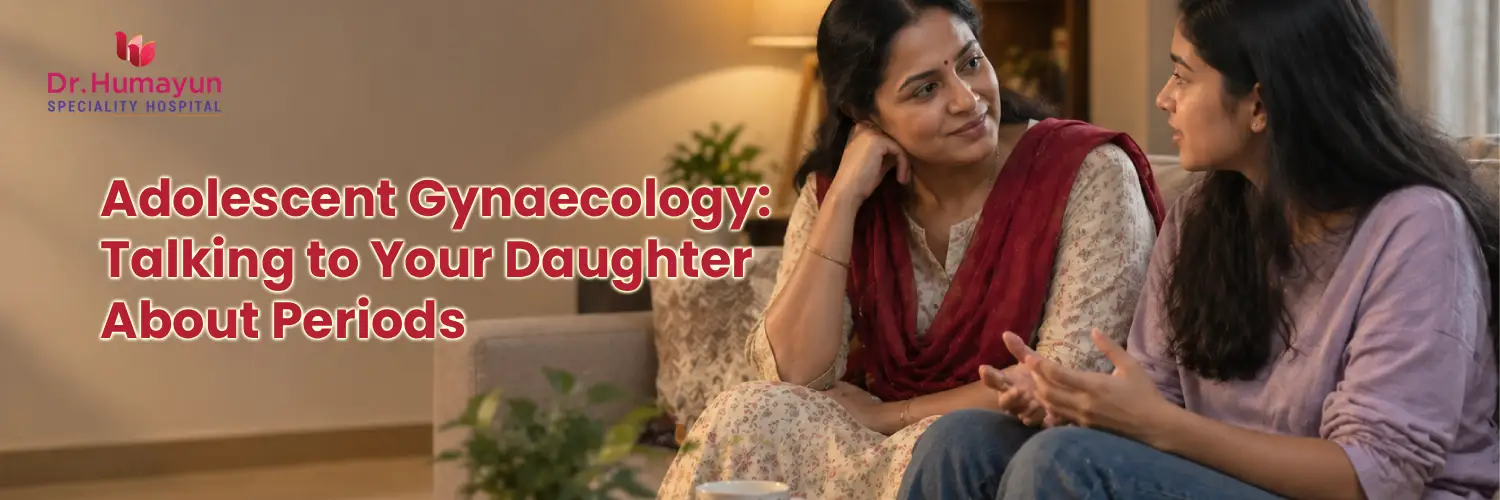
Menstrual health is still discussed awkwardly in many Indian homes, and girls often learn about periods from friends or the internet after they have already started. That gap leaves genuine problems unrecognised for years.
Knowing what is normal in the first few years makes it far easier to spot what is not.
When Periods Usually Start
The first period, menarche, typically arrives between eleven and fifteen, generally about two years after breast development begins. Indian girls on average start slightly earlier than a generation ago.
Assessment is warranted if there has been no breast development by thirteen, no period by fifteen, or no period within three years of breast development starting. Also seek advice if breast development begins before eight, which is early.
Irregular Cycles Are Normal at First
For the first one to two years after menarche, cycles are frequently irregular because ovulation has not yet settled into a rhythm. This is expected and usually needs nothing more than reassurance.
Normal in these early years covers cycles from twenty one to forty five days, bleeding lasting up to seven days, and occasional missed months.
What is not normal, even in the first years, is bleeding heavy enough to cause anaemia, bleeding for more than seven days, cycles consistently longer than ninety days, or pain that keeps a girl out of school.
Heavy Bleeding in Teenagers Deserves Attention
A teenager soaking through pads hourly, or flooding at night, needs assessment rather than being told it will settle.
The most common cause is anovulatory cycling as the system matures, but an important minority have an underlying bleeding disorder, most often von Willebrand disease. Heavy bleeding from the very first period is the specific pattern that raises this possibility.
Clues include easy bruising, frequent nosebleeds, prolonged bleeding after dental work, and a family history of bleeding problems. A full blood count, ferritin and clotting studies through our laboratory answer the question.
Period Pain: How Much Is Too Much
Some cramping is normal and comes from the uterus contracting. It typically begins with or just before bleeding and lasts a day or two.
Pain that requires missing school, that does not respond to simple painkillers, that causes vomiting or fainting, or that has been getting steadily worse over years is not ordinary period pain. In teenagers this can be the first presentation of endometriosis, which is frequently dismissed at this age and then diagnosed a decade later.
Anti inflammatory painkillers work best when started a day before bleeding rather than once pain has established. Heat, exercise and adequate sleep all help. If those fail, that is a reason to see a doctor rather than to endure it.
PCOS Often Starts Here
Polycystic ovary syndrome frequently declares itself in the teenage years, though diagnosis is deliberately cautious at this age because irregular cycles are normal early on.
Features that suggest it include cycles still very irregular more than two years after menarche, excess facial or body hair, persistent acne, weight gain around the abdomen, and darkened skin at the neck or armpits.
Early recognition matters because lifestyle intervention at fifteen is far more effective than at thirty. Our adolescent gynaecology service assesses this without rushing to label.
The HPV Vaccine Is Best Given Now
The ideal window for HPV vaccination is nine to fourteen years, before any exposure to the virus. In that age band only two doses are needed rather than three, and the immune response is stronger.
Parents sometimes hesitate because the vaccine relates to a sexually transmitted infection, which feels premature for a child. The relevant point is that the vaccine only works before exposure, so giving it early is what makes it effective. It is the same logic as any other childhood immunisation.
Boys benefit too, both directly and by reducing transmission. Discuss it with our paediatrics team or gynaecology department.
Practical Things Girls Need to Know
Much of what causes distress is simply lack of information.
- How to use and change pads, and that changing every four to six hours matters for hygiene
- That tampons and menstrual cups are safe options, including for girls who have not had intercourse
- That there is no medical reason to avoid bathing, exercise, sport or swimming during periods
- That period blood is not dirty, and that food restrictions around periods have no medical basis
- How to track cycles on a phone app, which is genuinely useful information for any future doctor
- That period products should be carried in advance rather than improvised at school
Cultural restrictions around temple entry, kitchen access or sleeping arrangements are matters for each family, but they should not extend to restricting a girl's schooling, sport or nutrition.
How to Start the Conversation
Begin before menarche rather than after, ideally around age nine or ten. A girl who is surprised by her first period at school has been let down.
Keep it factual and matter of fact. Embarrassment is contagious in both directions, and a parent who treats it as ordinary makes it ordinary. Fathers should be part of this too, since a girl who cannot mention periods to her father is less likely to mention pain to anyone.
Make clear that pain, heavy bleeding or anything worrying is something to report, not endure. That single message prevents most of the long delays we see in clinic.
Most teenage menstrual concerns turn out to be normal variation, and saying so with confidence is valuable in itself. The problems that are not normal, heavy bleeding, disabling pain and persistent irregularity, are all treatable and are best addressed early.
Our gynaecology department at T. Nagar offers adolescent consultations, with a parent present or separately as the family prefers.
Related Topics